Manage Measurement Point parameters
Parameters control naming, units, filtering, precision, scaling, and type-specific behavior for data displayed in Charts. Manage them from the Edit Measurement Point modal.
See the full parameter catalog and advanced field descriptions in Parameters overview.
Guests cannot modify parameters. Roles that can edit a Measurement Point may manage parameters.
Interface overview
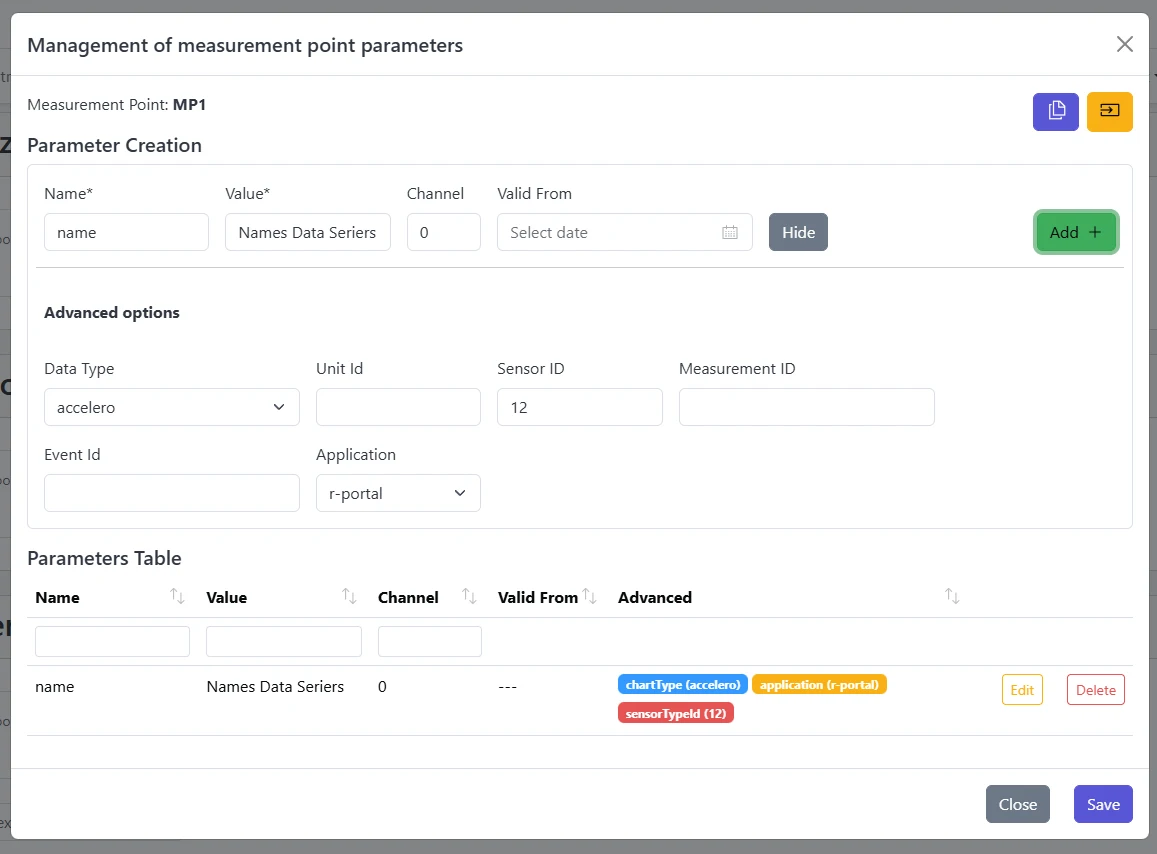
Main areas:
- Measurement Point header
- Bulk actions toolbar (Copy / Insert)
- Parameter form (create or edit)
- Parameters table (filter, sort, paginate)
Create or edit a parameter
- Fill required fields: Name, Value, Channel (if channel‑specific)
- (Optional) Add filters (validFrom, validTo, chartType, unitId, sensorTypeId, measId, eventTypeId, application)
- Click Add to create or Save (when editing)
- Confirm it appears or updates in the table
Changes are only applied after clicking Add or Save. Leaving the form without those actions discards edits.
Insert multiple parameters (bulk paste)
Use the Insert action to paste a JSON array of parameter objects:
- Click Insert
- Paste JSON
- Choose:
- Add only new — keeps existing; adds non-duplicates
- Overwrite — ⚠️ replaces all current parameters with pasted set ⚠️
- Confirm; new parameters appear at top
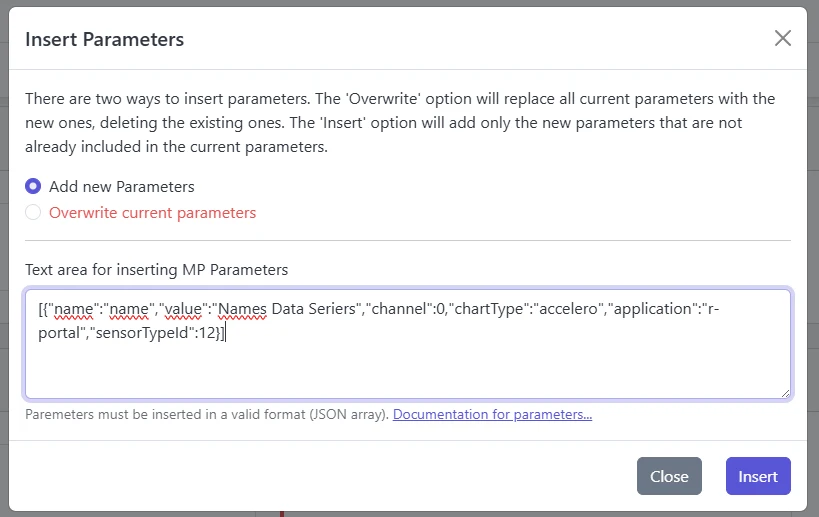
The system detects duplicates (same name, channel, and filters). Use Overwrite for full replacement or Add only new to extend.
Duplicate detection
If a pasted or created parameter matches an existing one, a duplicate alert appears and the new entry isn’t added. Adjust filters or rename as needed.
Unsaved changes prompt
Leaving the parameters modal with unsaved edits triggers a confirmation dialog—save changes or discard them.
Copy all parameters
Click Copy to place a JSON representation of all parameters on the clipboard (for backup or transfer to another Measurement Point).

Parameter precedence
When multiple records share the same name and scope, the most recent valid (by validFromEpoch) applies to data points in charts and exports.
Show data only from a given date
Valid to complements Valid from — it sets the moment a parameter stops applying.
Paired with the Hide data in charts parameter it makes a chart start at a "zero" date: set Hide data together with a Valid to and everything before that cutoff is hidden. Use it to show measurements only from the moment a Measurement Point was commissioned.
Hidden measurements are left out of exports too, and statistics (min, max, mean) are calculated only from the visible range.